How we make a 30-second AI spot in Arabic
A 30-second Arabic AI spot goes through seven steps: brief, script, style frames, generation, edit, voice and delivery. AI speeds up two of them. People own all seven.
 Made with AI
How an AI commercial is made, step by step
People ask how an AI commercial is made, usually because they want to know where the risk sits. Here are the seven steps we follow for a 30-second spot in Arabic. For each one you will see what it produces, what you approve and what breaks if it is skipped.
Thirty seconds at a normal pace is about seven or eight scenes. That small number is why each step matters. There is nowhere for a weak shot to hide. With standard choices, a 30-second commercial plans at SAR 5,500 to 9,000 (USD 1,500 to 2,400) Calculator estimate, before VAT. The budget calculator shows what moves it.
Made with AI1. Brief
One page. What people should feel, what they should do, where the film runs and in which formats. It also names which dialect, which real products must appear and who approves.
Produces: a brief both sides can point to.
You approve: the brief itself, including the list of versions.
If you skip it: people judge the film against different, unwritten goals. The disagreement shows up at the final cut, when it is hardest to fix.
2. Script
Written by people, in the dialect of the audience, then read aloud. If it does not sound right spoken, it is rewritten before anything is generated. Thirty seconds of Arabic holds fewer words than most first drafts assume, so timing it aloud is part of the job.
Produces: a timed script, scene by scene, with every on-screen line.
You approve: the words, the dialect and any claim about your product.
If you skip it: an English script translated at the end sounds translated, and the pictures are already locked to the wrong timing.
3. Style frames
A set of still frames that fix the look: light, colour, places, people, product. Nothing moves yet. Changes here are small, because no motion has been made. This is the step that saves the most work later.
Produces: stills that show what the finished film will look like.
You approve: the look. Bring your final approver here, not later.
If you skip it: the first time anyone sees the look is in motion. A change of direction then means generating scenes again.
4. Generation
Each scene is generated many times. A person keeps the few takes where motion, faces and product look right, and discards the rest. Your real product references are used at this step, and each kept shot is checked against them.
Produces: a selected set of takes for every scene.
You approve: nothing yet, unless you want to see selects. Motion is judged best in the edit.
If you skip the selection: you get the first thing the model made. That shows in hands, in faces and in products that change shape between shots. A person approves every frame, because a tool cannot judge whether a take is right.
5. Edit
Cut, colour, sound design and music. Text that must be exact, Arabic and English, is set here and checked by a person. Generated Arabic letters break too easily. If you are adding filmed material, it joins the film here. See AI commercials for what a commercial can include.
Produces: a full cut with sound, ready to review.
You approve: the story, the pace and the music. Most review rounds belong here. Two clear rounds are usually enough.
If you skip the care: the film feels like a list of nice shots. This step is where it becomes a commercial.
6. Voice and lip-sync
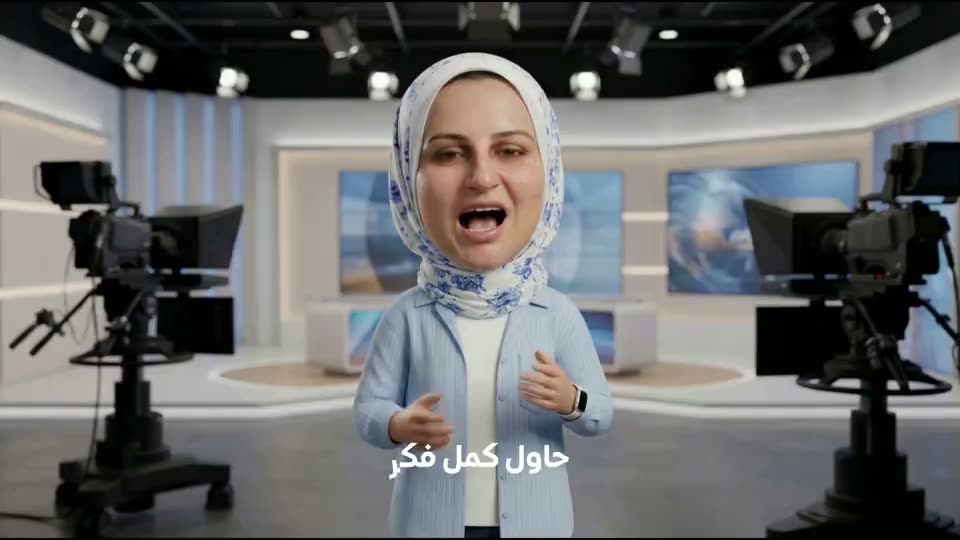
The voice is cast and approved by a native speaker. When someone speaks on screen, lip-sync is reviewed at full speed and at half speed. Hard words get diacritics in the voice script, so the engine reads them correctly. How to make Arabic AI video sound natural goes through the failures in detail.
Produces: a final voice track, locked to picture.
You approve: the voice casting, and how your brand name is said.
If you skip it: viewers forgive a soft shot before they forgive a wrong vowel. In Arabic, a voice that sounds off makes the whole film feel foreign. Arabic AI video explains how we handle voice and dialect.
7. Delivery
The master, the cut-downs and every platform format, each labelled Made with AI. Directed by people. Titles are checked in every crop, since Arabic lines can break differently in vertical.
Produces: the files for every placement in the brief.
You approve: final files, checked against the list from step 1.
If you skip the check: a vertical cut goes live with a title under the platform's buttons, or a version goes out with the wrong dialect.
Where AI helps in an AI commercial process, and where it does not
| Step | Made faster by AI | Decided by a person |
|---|---|---|
| Brief | No | Yes |
| Script | No | Yes |
| Style frames | Yes | Yes |
| Generation | Yes | Yes |
| Edit | No | Yes |
| Voice and lip-sync | Voices can be generated | Yes |
| Delivery | No | Yes |
AI makes steps 3 and 4 faster and lets you see more options. It does not write the brief, judge the take or approve the Arabic. People do that, at every step. We ask for one approver on your side too. That single line of approval does more for the film than any tool does.
What this means for your Arabic AI commercial
Three practical points follow.
Put your attention on the early steps. Your time is worth most at the brief, the script and the style frames. Decisions made there cost little to change. The same decisions made at step 5 cost much more.
Plan versions at step 1. A Khaleeji version and an Egyptian version are two scripts and two voices. They can often share pictures, if you plan for it.
Ask any studio to show you this list. Ask who approves what, and when. If a studio cannot tell you where a person checks the Arabic, you have learned something useful.
30-second AI spot questions
How long does a 30-second Arabic AI spot take to make?
It depends on scenes, versions and how quickly approvals come back. Tell us your air date first, and we will build the schedule back from it with you.
Can we skip style frames to save budget?
We advise against it. Style frames are the least costly place to change your mind. Skipping them moves those changes to a stage where scenes must be generated again.
Do we have to film anything for a 30-second AI spot?
Not always. Good photos of your product may be enough. If a real person must speak, we recommend filming them and adding that footage in the edit.