How to make Arabic AI video sound natural
Arabic AI video fails in predictable places: dialect, voice, lip-sync, type and culture. Choose the dialect before the script. Have a native speaker approve the voice. Check lip-sync at two speeds. Set Arabic copy in the edit.
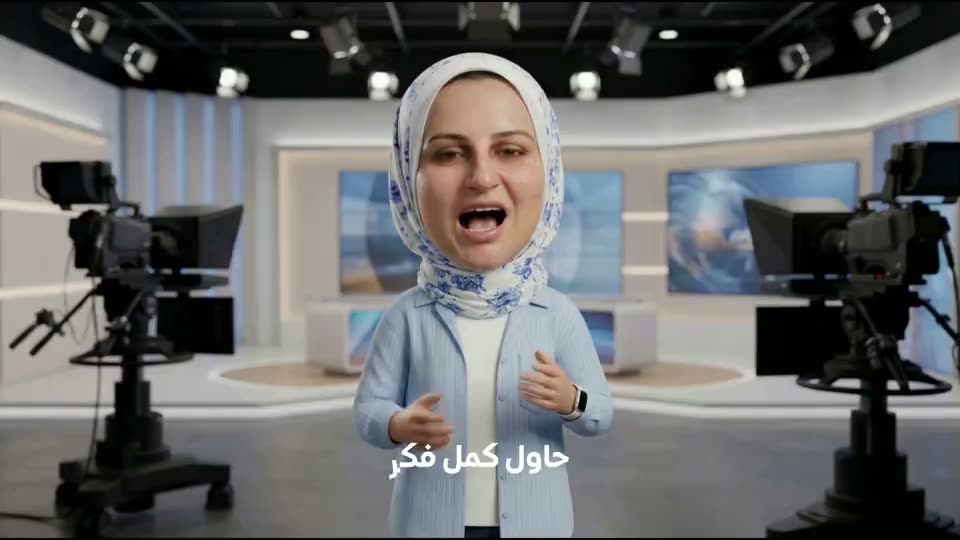 Made with AI
Why natural Arabic AI video is hard
Natural Arabic AI video does not come from a better button. It comes from decisions made before generation and a native ear after it. Most tools are stronger in English, and agencies working in the region say so. Impulse Digital, a Dubai agency, wrote on 3 September 2026 that Arabic "requires careful review for tone and naturalness".
The good news is that the failures are predictable. Here is where each one shows up, and how to catch it.
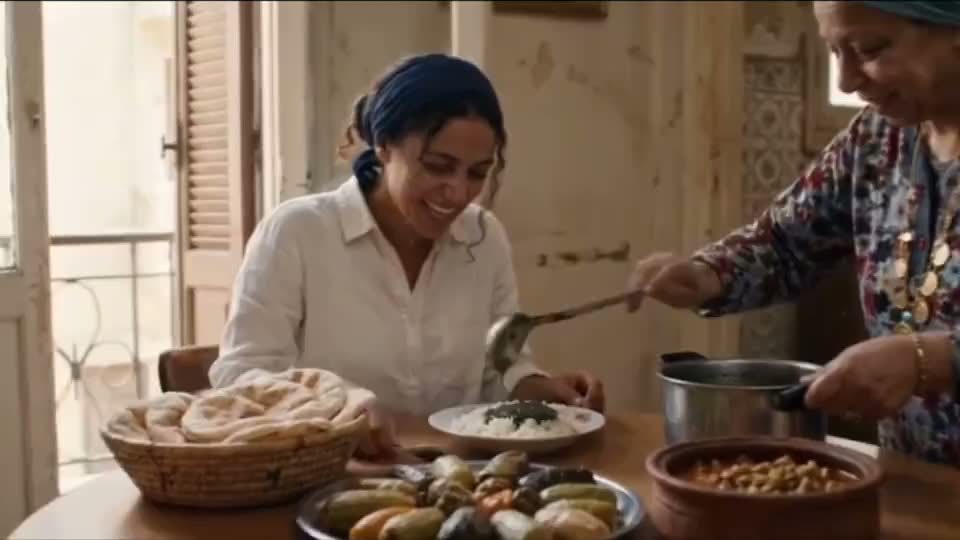 Made with AI
1. Dialect: choose it before the script
Modern Standard Arabic, Khaleeji and Egyptian are not interchangeable. A line that sounds warm in Cairo can sound stiff in Riyadh. Pick the audience, then the dialect, then write.
How it fails. An English script is translated word by word, and the result is correct and lifeless. Or the script mixes registers, with a formal sentence followed by a street phrase. Or the words and the voice disagree. An Egyptian says dilwa'ti for "now", and a Gulf speaker says alheen. An Egyptian says gamil for "beautiful", with a hard g, where many others say jamil. A viewer hears the mismatch at once, even if they could not explain it.
How to catch it. Write in Arabic from the start. Translate the idea, not the sentences. Read every line aloud before anything is generated.
Choosing an Arabic dialect for a regional campaign
We have no default dialect. We start with the audience: who is watching, where they live and what the film asks of them. A film speaking directly to Saudi audiences, about Saudi life, should sound Saudi. A film for Egypt should sound Egyptian. A government message may suit Modern Standard Arabic.
A regional film is harder, because no one dialect is home for everyone. Name the market that matters most and write for it first. Keep the words everyday, with no heavy slang and no jokes that only work in one neighbourhood. If one film has to do two jobs, make two versions.
2. Voice: why AI Arabic sounds wrong
A natural Arabic AI voice has to get more than the words right. Cast it the way you would cast an actor. Listen to several voices read the same line, and judge pace, warmth and stress.
How it fails. Stress lands on the wrong syllable. A happy line comes out flat. Formal Arabic pronunciation slips into a dialect script for one word, usually a number or a date.
Diacritics. Written Arabic usually leaves out short vowels, and a reader fills them in from context. A voice engine guesses. The same letters, k-t-b, can read kataba, "he wrote", or kutub, "books". When the engine guesses wrong, add diacritics to that word in the voice script only, then listen again. Write numbers, dates and prices out in words, so you choose the form.
How to catch it. A native speaker approves every synthetic voice, every time. Where the voice carries the whole film, also compare it with a human voice. Sometimes the human voice is the right call.
3. English words inside Arabic speech
Real Arabic speech is full of English: app, delivery, offer, Wi-Fi, brand names. People say these without thinking. Engines do not.
How it fails. The voice spells out a brand name letter by letter. It reads an English word with Arabic rules until nobody recognises it. It jumps into a different accent for one word, then back again.
How to catch it. List every brand name, product name and English word in the script. Agree how each one is said, and note it for the voice. Write difficult words in Arabic letters as they sound. Decide too whether a word should stay in English at all, since the natural word for your audience may be Arabic.
4. Lip-sync: its own pass
When a character speaks on screen, mouth shapes must match the Arabic sounds, not English ones. Arabic has sounds made deep in the throat, with little movement at the lips, as well as long vowels that hold the mouth open.
How it fails. The mouth keeps moving after the line ends. Lips close on a sound that does not close them. The face looks as if it is speaking a different language, because it was trained on one.
How to catch it. Review at full speed, then at half speed. Small errors read as fake faster than any other mistake. Where the sync will not hold, change the shot. A hand, a reaction or a wider frame can carry the line as voiceover. Fewer talking faces can be better, not just simpler.
5. Arabic text in AI video
Arabic letters join, and they change shape depending on their position. Many generators break them apart, reverse them or invent letters that look right to someone who cannot read them.
How it fails. A shop sign in the background reads as nonsense. A headline runs left to right. A line breaks in the middle of a word. Punctuation sits on the wrong side.
How to catch it. Set Arabic copy in the edit, not inside the AI image. Ask for scenes with no text, or plain signs you can replace. Use a typeface designed for Arabic, not one with Arabic added as an afterthought. Check every line break. Check again on a phone, since that is where most viewers will read it. Then pause on every frame with background writing, since those are the ones people screenshot.
6. Culture is part of quality
A film can sound perfect and still look foreign. Models tend to fall back on a generic idea of the region.
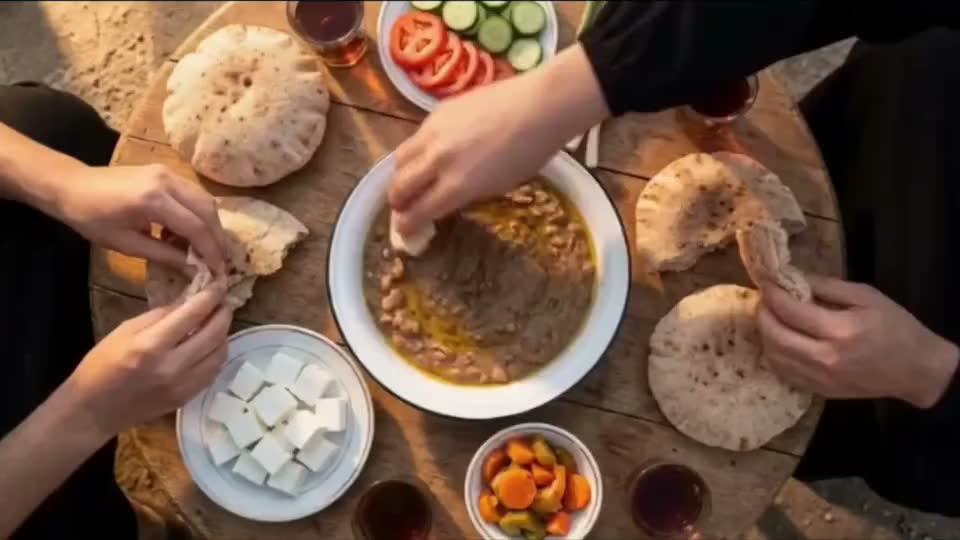
How it fails. Desert and gold in a film about city life. Clothes from the wrong country. A family meal that no local family would recognise. A gesture or a joke that means something else here. Ramadan details that look right in a stock photo and wrong in a real home.
How to catch it. A native reviewer watches the whole film, not only listens to it. Sound off once, to judge the picture alone. Sound on, eyes closed, to judge the voice alone.
The review list we use
- Dialect matches the audience
- Script written in Arabic and read aloud
- Voice approved by a native speaker
- Hard words given diacritics in the voice script
- English words and brand names agreed
- Lip-sync checked at two speeds
- Arabic copy set in the edit and joined correctly
- Cultural review of the full cut
Get these right, and Arabic stops being the weak point of the film. For what this looks like as a service, see Arabic AI video. For where these checks sit in a production, read how we make a 30-second AI spot in Arabic. For market notes, see our pages for brands in Riyadh and Cairo.
Natural Arabic AI video questions
Can a voice engine handle Khaleeji and Egyptian equally well?
Do not assume so. Test each engine with your own script and let a native speaker of that dialect judge it. Results vary by voice, by line and by engine version.
Why does Arabic text come out broken in AI video?
Image and video models draw letter shapes without reading them. Joined script is hard to draw that way. Set the text in the edit, where it is real type.
Is Modern Standard Arabic the safe choice for AI video?
It is widely understood, but it can feel distant in an ad. It suits formal messages better than warm ones. Choose it because it fits the message, not because it feels safe.